Weirdest Flowers in the World: 40 Strange Blooms and Why They Look That Way
Most flowers try to look pretty. A few go in the opposite direction. They look like monkeys, ducks, bats and dancing girls. They smell like rotting meat. Some trap the insects that visit them, some eat insects, and some live underground with no leaves at all.
None of this is an accident. A flower that looks weird is usually a flower with a plan. It is copying an animal to fool a pollinator, or stinking on purpose to attract flies, or hiding in plain sight so it is not eaten. This guide looks at the world’s weirdest flowers through that lens: not just what they look like, but the trick each one is using, and whether a gardener could ever grow it.
Quick Answer
The weirdest flowers in the world get their strangeness from five tricks: looking like an animal, smelling like rotting meat, trapping or eating insects, not looking like a flower at all, and living off another plant. Famous examples are the monkey face orchid, the flying duck orchid, the corpse flower and the corpse lily, the hammer orchid, the white egret orchid, the voodoo lily, the tropical pitcher plant, the living stones plant and the welwitschia. Most of them cannot be grown at home — they need a cloud forest, a desert, a host plant or a particular fungus — but a few, like living stones, the silver vase bromeliad and spider chrysanthemums, are easy house or garden plants.
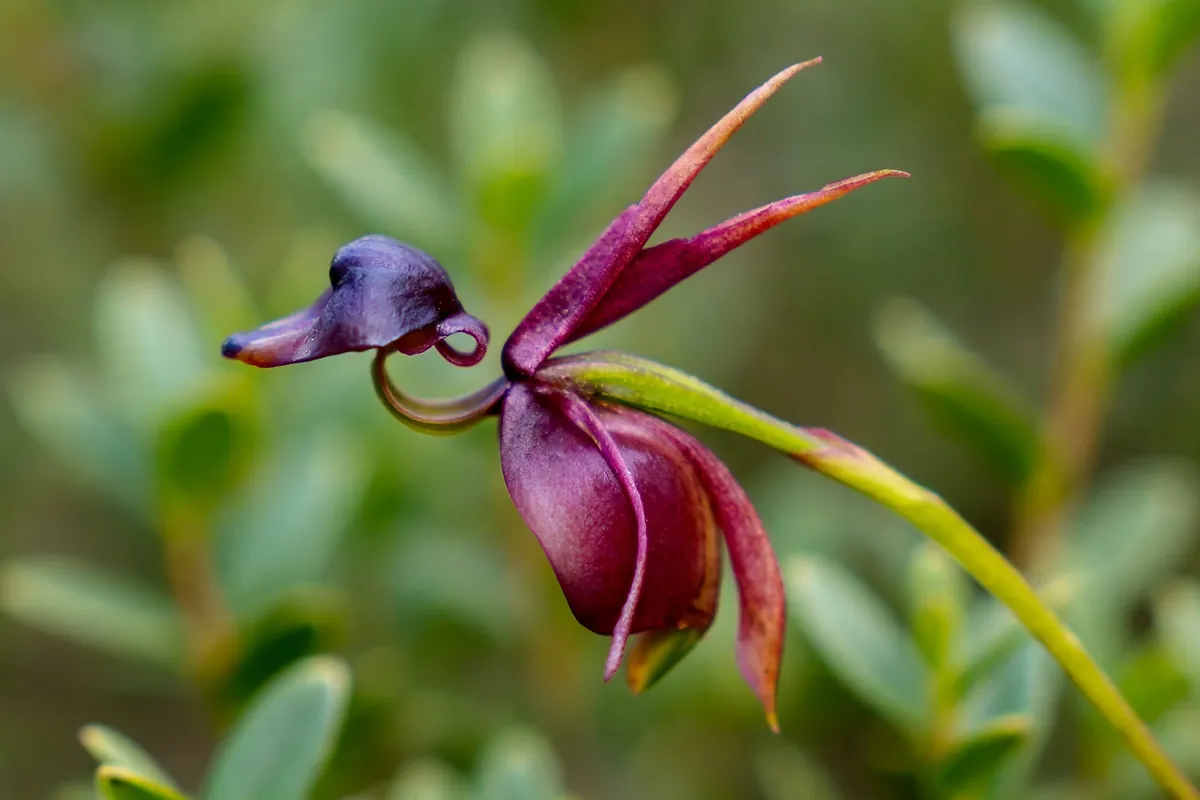
Table of Contents
- Why Do Flowers Get Weird?
- 1. Flowers That Look Like Animals
- 2. Flowers That Smell Like Rotting Meat
- 3. Flowers That Trap or Eat Their Visitors
- 4. Flowers That Do Not Look Like Flowers at All
- All 40 Weirdest Flowers at a Glance
- Which Weird Flowers Can You Actually Grow?
- Frequently Asked Questions
Why Do Flowers Get Weird?
A flower has one job: to get pollen from one plant to another. Pretty colours and sweet scent do that job for bees and butterflies. But bees and butterflies are not the only pollinators. Flies like rotting meat. Wasps chase female wasps. Bats fly at night and cannot see colour well. A flower that needs one of those visitors has to speak its language, and that is where the weirdness comes from.
That is also why our two earlier lists look different from this one. Our guide to 25 unusual and beautiful flowers collects the prettiest oddities, and our cool flowers list picks fourteen favourites with a growing note each. This article is the third piece of the set: the same strange plants, explained by the trick they use. Where a flower is already covered in one of those guides, we say so and move on to what it is actually doing.
| The trick | What the flower does | Who it is fooling |
|---|---|---|
| Look like an animal | Copies a face, a bird or an insect | Pollinators that mate with, or are scared of, that animal |
| Smell like death | Releases a rotting-meat stink | Carrion flies and beetles |
| Trap or eat visitors | Holds insects inside, or digests them | Flies, wasps and ants |
| Do not look like a flower | Mimics stone, skulls, hands or pine cones | Predators — and sometimes pollinators too |
| Live off another plant | Grows with no leaves, roots or chlorophyll | Nobody — it steals food from a host instead |
1. Flowers That Look Like Animals
Animal mimicry is the most famous weird-flower trick, and orchids are the masters of it. An orchid that looks like a female bee or wasp does not need sweet nectar. A male insect sees it, tries to mate with it, and flies off covered in pollen.
Monkey Face Orchid (Dracula simia)
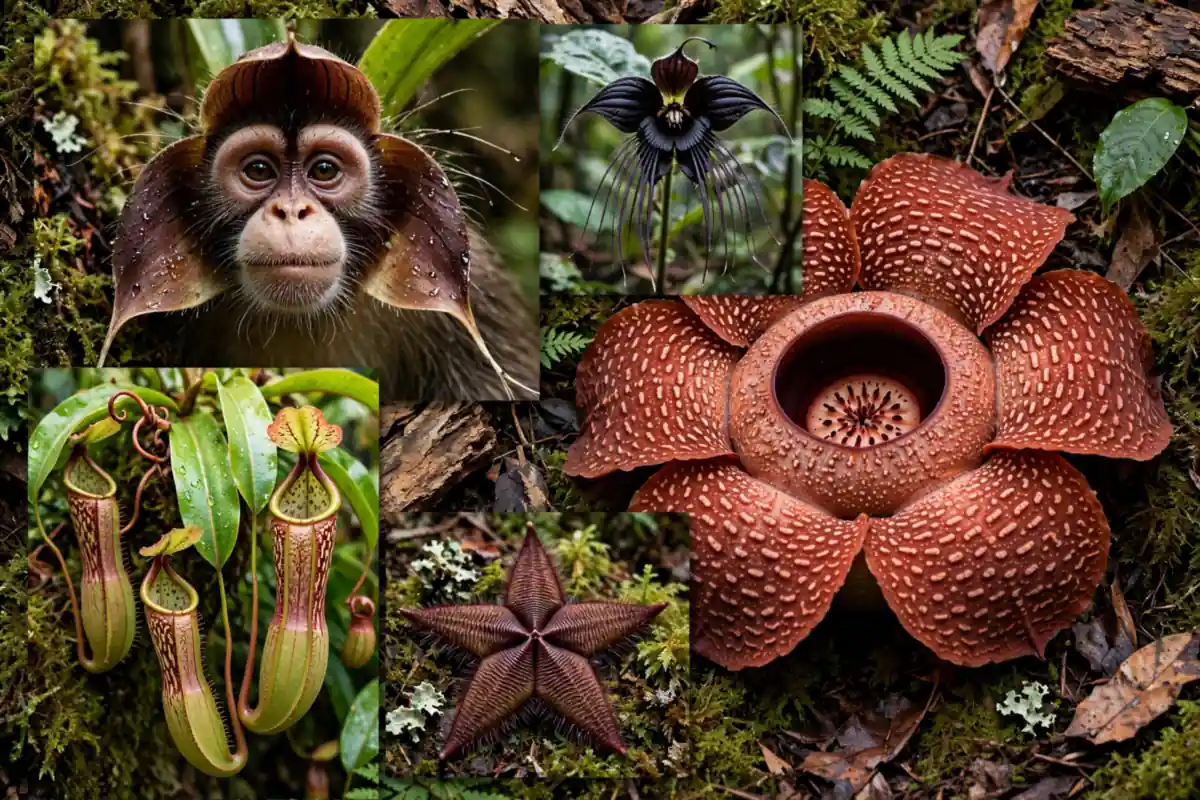
Each small bloom really does look like a tiny monkey’s face, with two dark eyes, a furry nose and a little beard. It grows only in the cloud forests of Peru and south-eastern Ecuador, above 900 metres, and it can bloom all year round. Its scent is a surprise: ripe oranges. It is a cool-growing greenhouse specialist, not a windowsill plant, and it is already in our unusual flowers guide.
Flying Duck Orchid (Caleana major)
This Australian native looks exactly like a duck in flight, bill and all. A sawfly lands on the bill, its own weight tips it down into the flower, and the only way out is past the pollen. The trick works so well that the plant has never been grown in a garden: it depends on one particular soil fungus that only grows in Australia. See our Australian native flowers guide for more plants from the same wildflower country.
Hammer Orchid (Drakaea glyptodon)
Another Western Australian, and another wasp trick. The hammer orchid makes a scent that copies a female wasp, a male lands on the dark purple lip, and the lip swings back like a hammer, pushing him into the pollen. It is tiny, easy to miss in the bush, and impossible to grow at home.
Dove Orchid (Peristeria elata)
Inside each white, marbled flower sits a small dove with open wings, so neatly formed that it looks carved from ivory. It is the national flower of Panama, and it grows on the ground rather than on trees, which is unusual for an orchid. It is endangered in its home country because so many plants were picked, so admire it in photographs and botanical gardens.
White Egret Orchid (Habenaria radiata)
This one looks like a white egret taking off, fringed wings and all. A single spike can carry up to ten flowers and reach about 40 cm tall. Unlike most of the orchids on this list it is a real garden plant in the right climate: it likes moist soil, sun, and a cold winter rest, and it grows well in pots in Asia and parts of the United States.
Bat-Faced Cuphea (Cuphea llavea)
A small flower with a dark purple face and two red ears, like a tiny bat. It is one of the few animal-look flowers that anyone can grow: a tender annual or short-lived perennial for full sun and well-drained soil, happiest in containers where its funny little faces sit at eye level.
2. Flowers That Smell Like Rotting Meat
If your pollinator is a fly, perfume is useless. Flies look for dead animals, so these flowers smell like one. The stink is made on purpose, and it works: carrion flies and beetles arrive in large numbers, pick up pollen, and carry it to the next stinking bloom.
Corpse Flower, or Titan Arum (Amorphophallus titanum)
The titan arum makes the largest unbranched flower structure in the world, up to about 3.7 metres tall and nearly 90 kg, and it blooms only once every few years, for a day or two. When it opens, it smells of rotting flesh, heats up to spread the scent, and draws crowds to the botanical gardens lucky enough to have one. It needs a tropical greenhouse and a decade of patience, so for almost everyone it is a plant to visit, not to grow.
Corpse Lily (Rafflesia arnoldii)
The corpse lily makes the world’s largest single flower, and it has no leaves, no roots and no stems. It is a parasite that lives entirely inside a host vine in the rainforests of Sumatra and Borneo, and only the huge, mottled red flower ever appears. You can read the full story on the Rafflesia page on Wikipedia. It cannot be grown at all, which is part of why it is so famous.
Voodoo Lily (Dracunculus vulgaris)
A dark purple, almost black spathe around a dark spike, lasting only three or four days, with a smell that some people compare to a dead possum. It looks tropical but it is a hardy bulb from the Mediterranean, and it will grow in ordinary garden soil in mild climates. Plant it away from the patio and downwind of the house.
Star Flower (Stapelia grandiflora)
Also called the starfish flower, this is a succulent with large, hairy, leathery flowers in deep red and purple that smell of rotting meat. Flies love them, which is exactly the point. Unlike the other carrion flowers here, this one is an easy houseplant: bright light, very little water, and a pot you can move outdoors in summer, away from open windows.
Hydnora (Hydnora africana)
Hydnora barely looks like a plant at all. It lives underground in the dry parts of southern Africa, with no leaves, no roots and no chlorophyll, stealing food from the roots of other plants. After nearly a year underground, a fleshy, foul-smelling flower pushes out of the soil. Local people call it jackal food, and its fruit is edible when baked. It cannot be cultivated.
3. Flowers That Trap or Eat Their Visitors
Some weird flowers do not just attract insects — they hold them, use them, or digest them. The trap is usually gentle and short-lived for a pollinator, and fatal only for the plants that eat insects for food.
Tropical Pitcher Plant (Nepenthes)
The pitchers are not flowers at all: they are modified leaves shaped like goblets, filled with sweet nectar and slippery walls. Insects slide in and cannot climb out. These are carnivorous climbers from the jungles of South-East Asia, and they make rewarding houseplants in a bright, humid spot — a bathroom window or a terrarium is ideal.
Brazilian Dutchman’s Pipe (Aristolochia gigantea)
A huge, mottled flower shaped like a pipe, with a foul smell despite its size. Like its smaller North American cousin, it traps tiny flies inside overnight and releases them the next day dusted with pollen. Gardeners should know one warning: pipevine swallowtail butterflies mistake it for their native host plant, lay eggs on it, and the caterpillars cannot survive on it. Grow it only where that butterfly does not live, or skip it.
Chamber Maids (Calceolaria uniflora)
Also called Darwin’s slipper or the happy alien, this tiny mountain flower from Tierra del Fuego has a white plate that tempts local birds to eat from it, picking up pollen on their heads as they do. The whole plant is only about 10 cm tall, with 5 cm blooms, and it needs cold weather and an alpine house to grow at all.
Pleurothallis truncata
This orchid is so strange it does not even have a common name. Its small orange flowers grow sideways along the stem, like a tiny row of bonnets. It is a cool-growing, high-altitude orchid that likes low moisture and cool nights — a specialist plant for an orchid grower, not a first orchid.
4. Flowers That Do Not Look Like Flowers at All
The last group hides in plain sight. These plants look like stones, skulls, hands or pine cones, and the disguise is the point: it keeps them from being eaten, or it makes a pollinator look twice.
Living Stones (Lithops)
Living stones are succulents that look exactly like pebbles. When they bloom, a white or yellow daisy pushes out of what appears to be solid stone. They come from South Africa, need almost no water, and are one of the easiest weird plants to grow indoors — a sunny windowsill, gritty soil, and water only when the old leaves shrivel.
Welwitschia (Welwitschia mirabilis)
Welwitschia has only two leaves in its whole life, and they grow, split and tangle for centuries — some plants are thought to be 1,500 years old. It grows in one strip of the Namib Desert between Angola and Namibia, and it gets its water from fog and dew. Its small cone-like flowers look as if they have fungus on them, but that is simply how they are. It cannot be grown in a garden.
Snapdragon Seed Pods
Snapdragons are cheerful, ordinary garden flowers — until they go to seed. The dried seed pods look like tiny skulls, complete with eye sockets. People once believed snapdragons protected a house from curses, which makes the little skulls feel like a reminder of the circle of life. Snapdragons themselves are easy annuals, so this is the cheapest weird flower on the list to grow.
Devil’s Hand (Chiranthodendron pentadactylon)
The flowers of this Mexican tree look like a red clawed hand, or a monkey’s paw. The Aztecs held it in high regard and used its fruit in traditional medicine. The tree is extremely hardy for a tropical plant and can grow 40 to 90 feet tall, so it is a tree for a large, warm garden, not a pot.
Silver Vase (Aechmea fasciata)
A bromeliad with broad, silvery-striped leaves and a spiky pink flower head. It has won the Royal Horticultural Society’s Award of Garden Merit because even people without green thumbs can grow it: bright indirect light, a little water in the cup of the leaves, and patience. After it flowers, it makes pups at the base that you can pot up, so one plant becomes several.
All 40 Weirdest Flowers at a Glance
Our competitor’s list has forty flowers, plus ten bonus oddities. Here they all are in one place, with the trick each one uses and an honest answer on growing it — the two things that list does not give you. Flowers already profiled in depth above are marked with a star.
| Flower | Trick | Can you grow it? |
|---|---|---|
| Monkey face orchid * | Looks like a monkey | Expert greenhouse only |
| White bat flower | Looks like a bat | Houseplant in warm, humid shade |
| Moth orchid | Looks like a moth; reblooms | Yes — the common houseplant orchid |
| Corpse flower (Rafflesia) * | Smells like rotting meat; parasitic | No |
| Naked man orchid | Looks like tiny naked men | No — protected wild orchid |
| Hooker’s lips | Red bracts like lips | Tropical greenhouse only |
| Dancing girls | Looks like dancing ladies | Tropical greenhouse only |
| Hydnora * | Parasite; smells of dung | No |
| Bee orchid | Mimics a female bee | No — needs a soil fungus |
| Swaddled babies orchid | Hides a baby-like form | Expert greenhouse only |
| Parrot flower | Looks like a parrot in flight | No — endangered, protected |
| Snapdragon seed pods * | Dried pods look like skulls | Yes — easy annual |
| Flying duck orchid * | Looks like a duck; traps sawflies | No — never propagated |
| Moon orchid | Striped petals; pareidolia faces | Yes — common houseplant orchid |
| Chamber maids * | Feeds birds to carry pollen | Alpine greenhouse only |
| Passion flower | Alien-looking fringed bloom | Yes — hardy vine, zones 5–9 |
| Angel orchid | Looks like an angel in a gown | Expert greenhouse only |
| Dove orchid * | Hides a dove inside | Expert only; endangered |
| Titan arum * | Smells like rotting meat; giant | Botanical gardens only |
| White egret orchid * | Looks like an egret in flight | Yes, in moist soil and pots |
| Fly orchid | Mimics a fly; makes pheromones | No — protected wild orchid |
| Protea pinwheel | Firework pincushion; fire-germinated | Mediterranean climates only |
| Voodoo lily * | Smells like a dead possum | Yes — hardy bulb |
| Living stones * | Looks like a pebble | Yes — easy indoor succulent |
| Brazilian Dutchman’s pipe * | Traps flies; pipe-shaped | Tropical vine; see warning above |
| Star flower * | Smells like rotting meat | Yes — easy houseplant succulent |
| Hammer orchid * | Mimics a female wasp | No — wild only |
| Tropical pitcher plant * | Eats insects | Yes — humid houseplant |
| Flame lily | Flame-shaped climbing petals | Yes — ornamental; poisonous to cats |
| Bird of paradise | Looks like a bird in flight | Yes — houseplant, zones 9–11 |
| Beehive ginger | Bracts like a beehive | Yes — large pot, tropical |
| Snake gourd flower | Fringed white flower; edible fruit | Yes — vegetable garden vine |
| Spider chrysanthemum | Long, spidery petals | Yes — easy container mum |
| Pleurothallis truncata * | No common name; sideways blooms | Expert orchid grower only |
| Devil’s hand * | Flowers like a clawed hand | Warm climates; huge tree |
| Welwitschia * | Two leaves for 1,500 years | No — Namib Desert only |
| Lobster claw | Bracts like a lobster claw | Tropical landscape only |
| Sturt’s desert pea | Blood-red alien-looking bloom | Protected — admire, do not pick |
| Silver vase * | Spiky pink head; striped leaves | Yes — easy houseplant |
| Bleeding heart (bonus) | Heart-shaped blooms with a drop | Yes — classic shade perennial |
If you grow the cut-flower ones on this list, like spider chrysanthemums, our guide on how to make cut flowers last longer covers the same tricks for other short-lived blooms. And if you want the full A to Z of flower names rather than only the strange ones, our flower names A to Z pillar links every letter guide on the site.
Which Weird Flowers Can You Actually Grow?
Count them from the table above and the answer is kinder than it first looks: about a dozen of the forty are realistic garden or house plants. The easiest five for a beginner are living stones, the silver vase bromeliad, spider chrysanthemums, snapdragons and the moth orchid. All five are sold in ordinary garden centres, none needs a greenhouse, and none will stink out your house.
The ones to admire from a distance are the parasites and the fungus-dependent orchids: Rafflesia, Hydnora, the flying duck orchid, the hammer orchid and the bee orchid. They do not refuse to grow out of stubbornness. They literally cannot live without a host plant, a particular fungus or a particular insect, and no pot or greenhouse can replace that. Gardeners on r/gardening on Reddit swap photos of the growable ones every season, and the advice is nearly always the same: start with living stones or a silver vase, and leave the corpse flowers to the botanical gardens.
Frequently Asked Questions
What is the weirdest flower in the world?
There is no official title. The two most named are the monkey face orchid, whose blooms look like a monkey’s face, and Hydnora, a parasitic plant that grows underground and smells of dung. The titan arum and Rafflesia are the usual answers for the biggest and the smelliest.
Why do some flowers smell like rotting meat?
To attract flies and carrion beetles, which are their pollinators. The smell is made on purpose, and the flower often heats up to spread it further. The insects pick up pollen while they investigate, then carry it to the next flower.
Can I grow weird flowers at home?
Some, yes. Living stones, silver vase bromeliads, spider chrysanthemums, snapdragons, moth orchids and star flowers are all realistic house or garden plants. Most of the famous ones cannot be grown at home at all, because they need a host plant, a particular fungus, or a cloud-forest climate.
Are weird flowers dangerous or poisonous?
A few are. The flame lily is poisonous to people and especially to cats, and the voodoo lily and titan arum are best admired rather than touched or eaten. Most weird flowers are harmless to look at — the danger, if any, is to the insects they trap. For more grower views, see questions about weird flowers on Quora.
Which weird flower is easiest for beginners?
Living stones. They need a sunny windowsill, gritty soil and almost no water, and their daisy-like bloom appearing from a pebble is the best surprise in the houseplant world. The silver vase bromeliad is a close second.