Flower Bed Ideas: 12 Designs for Every Garden (With Plant Lists)
The difference between a flower bed that looks “planted” and one that looks designed is rarely money — it is having an idea before you dig. A single clear concept (a colour, a shape, a purpose) turns a row of plants into a bed with intent.
Here are 12 flower bed ideas that work in real gardens, from cottage curves to a five-plant minimalist bed — each with the key plants that make it work and the gardens it suits best.
Quick Answer
The most popular flower bed ideas are: a curved cottage bed of mixed perennials, a raised bed for easy care, a pollinator bed of nectar flowers, a white-and-green bed for elegance, a low-maintenance perennial bed, and a colour-themed bed (all-pink, sunset, or purple). Pick the idea that matches your space and light first — then plant it in layers, tall at the back and low at the front.
Table of Contents
- 12 Flower Bed Ideas
- How to Choose the Right Idea for Your Garden
- Three Ready-Made Planting Recipes
- Flower Bed Ideas for Small Gardens
- Frequently Asked Questions
12 Flower Bed Ideas
| # | Idea | Key plants | Best for |
|---|---|---|---|
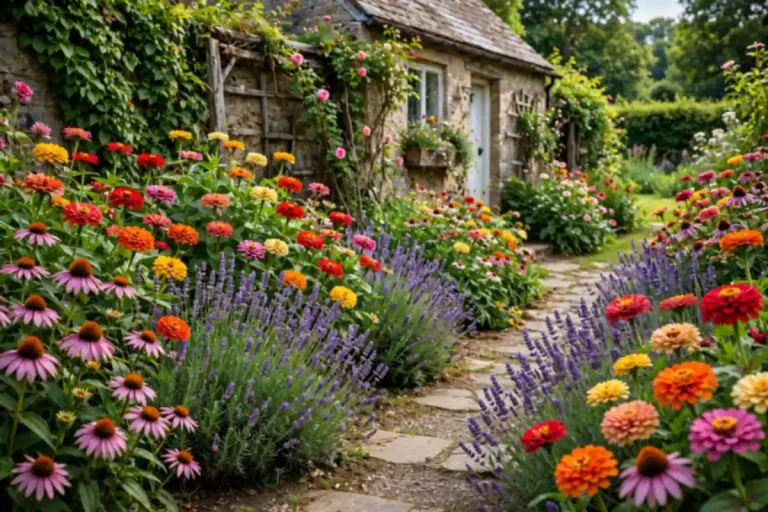
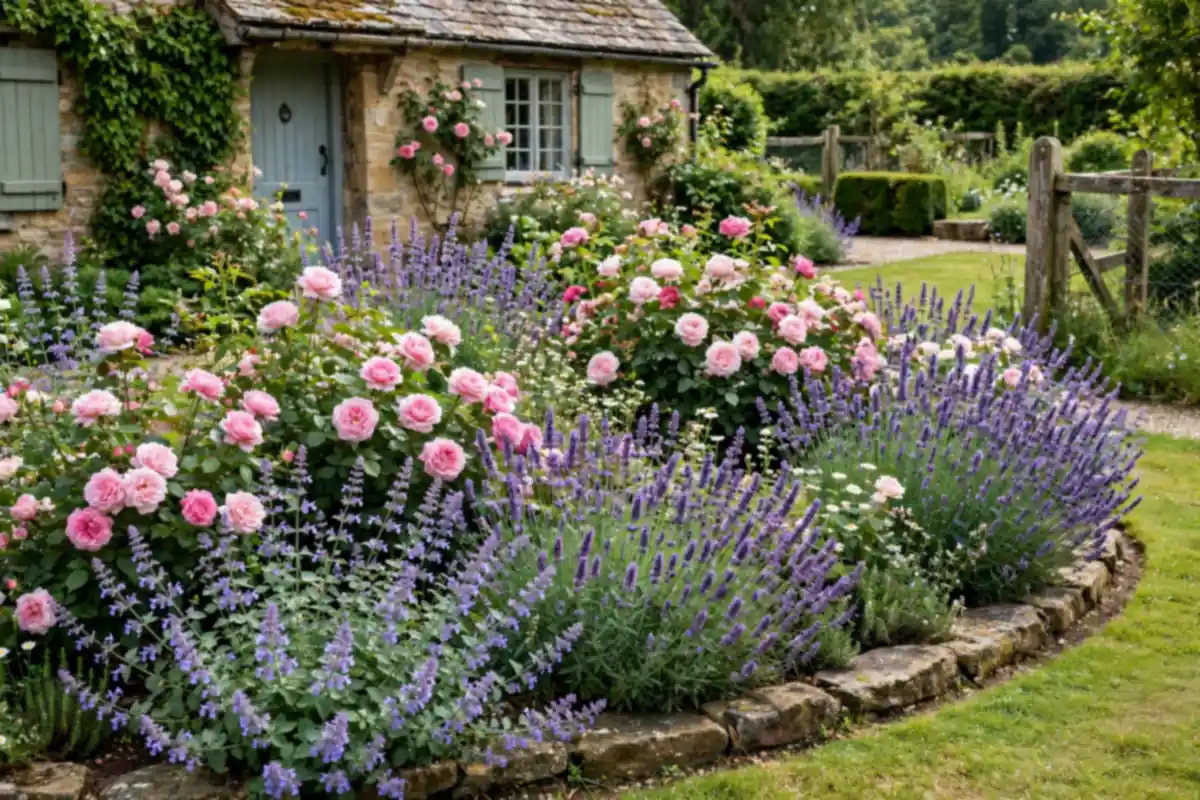
| 1 | Curved cottage bed | Roses, lavender, catmint, foxgloves, hardy geraniums | Informal gardens; softens straight fences |
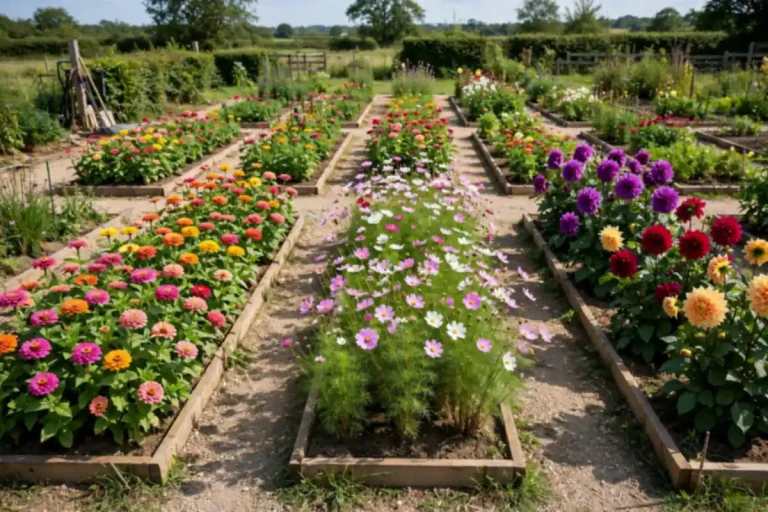
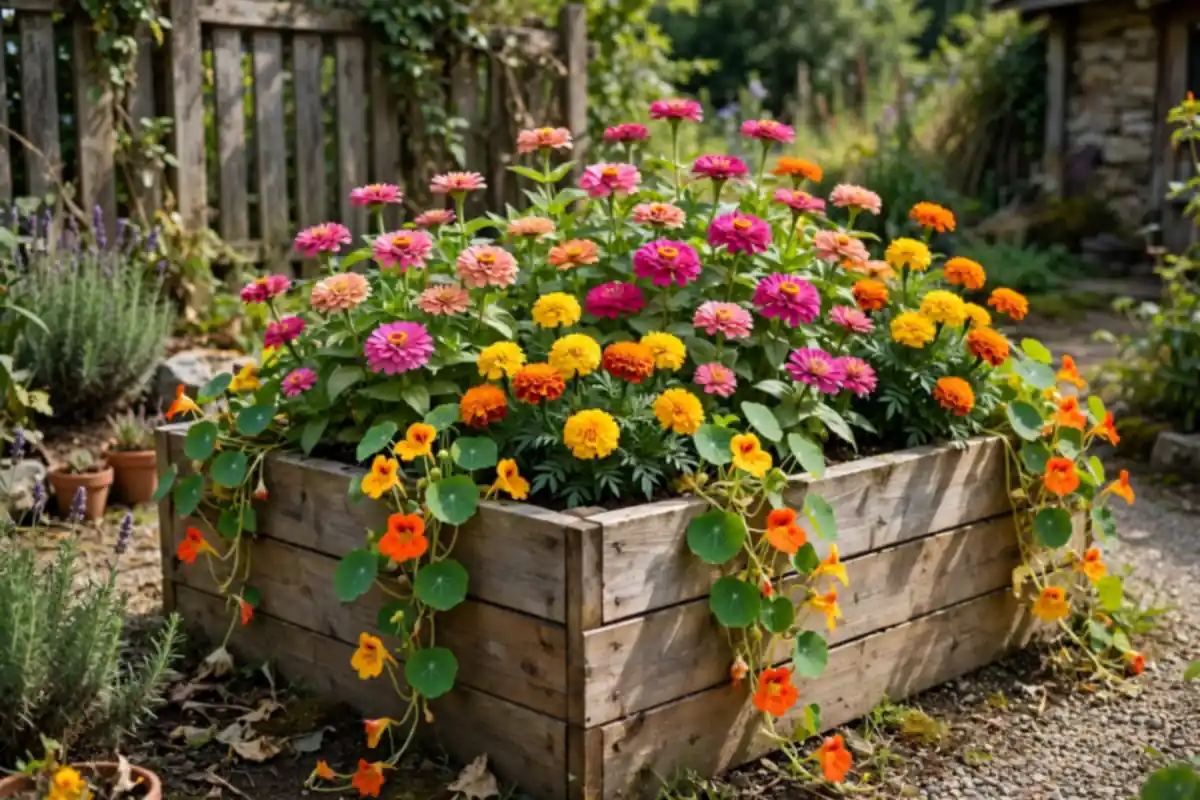
| 2 | Raised flower bed | Any — add trailers (nasturtium, lobelia) at the edges | Poor soil, small gardens, gardeners with bad backs |
| 3 | Pollinator bed | Coneflower, salvia, lavender, cosmos, borage | Wildlife lovers; near-zero maintenance |
| 4 | White garden bed | White roses, cosmos, gaura, silver foliage (artemisia, lamb’s ear) | Elegant evening gardens; glows at dusk |
| 5 | Colour-themed bed | One colour family in many shades — e.g. pink: echinacea, phlox, roses, asters | Instant designer look with any plants |
| 6 | Island bed in the lawn | A small tree or shrub centrepiece ringed with perennials | Large plain lawns that need a focal point |
| 7 | Shade bed | Hostas, astilbe, ferns, bleeding heart, foxglove | North-facing and tree-shaded spots |
| 8 | Low-maintenance perennial bed | Daylilies, sedum, ornamental grasses, coneflower, Russian sage | Busy gardeners; plant once, enjoy for years |
| 9 | Front-yard welcome bed | Compact shrubs + long-season annuals (marigold, zinnia, salvia) | Kerb appeal; tidy, colourful, polite |
| 10 | Bed around a tree | Spring bulbs, epimedium, hardy geraniums, hostas | Dry shade under established trees |
| 11 | Sunset bed | Orange marigolds, red-hot pokers, crocosmia, apricot roses, purple salvia contrast | West-facing beds that catch evening light |
| 12 | Five-plant minimalist bed | One grass + one perennial + one shrub, repeated | Modern gardens; maximum calm, minimum shopping |
Every idea above still obeys the same construction rules — shape, soil, layers, mulch — which our flower bed step-by-step covers in full. Ideas change the planting, not the foundations.
How to Choose the Right Idea for Your Garden
- Start with light. Six hours of sun opens every idea on the list; deep shade narrows you to idea 7 and 10 — embrace them rather than fighting the site.
- Match the house. Curved cottage beds suit older and informal homes; straight, colour-blocked beds suit modern ones. (The principles are classic garden design: unity first, variety second.)
- Decide your effort level honestly. Annual-heavy beds are spectacular and need replanting yearly; perennial beds (ideas 3, 8, 12) ask for one weekend a year.
- Give the bed a job. Screen a fence, welcome guests, feed bees, frame a view — a bed with a purpose is far easier to choose plants for. In a whole flower garden, different beds can carry different ideas and still harmonise through repeated plants.
Three Ready-Made Planting Recipes
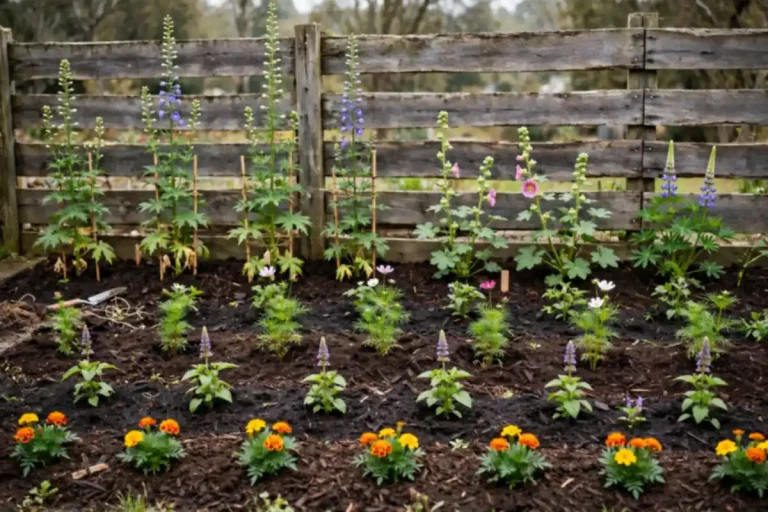
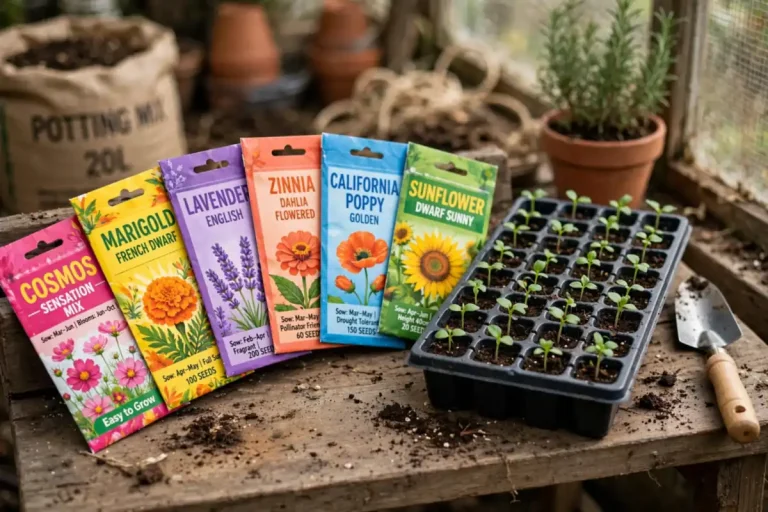
Beginner sunny bed (3 × 1 m): back — 3 coneflowers + 2 salvias; middle — 5 zinnias; front — 7 marigolds. Blooms June to frost, costs little, forgives everything.
Scented evening bed by a path: back — 1 white rose; middle — lavender and gaura; front — night-scented stock sown in spring. Walk past it at dusk and you will understand. Our flower border guide has the layout patterns to set it out.
Dry, low-water bed: back — Russian sage; middle — sedum and echinacea; front — lamb’s ear and thyme. Water to establish, then almost never again.
Flower Bed Ideas for Small Gardens
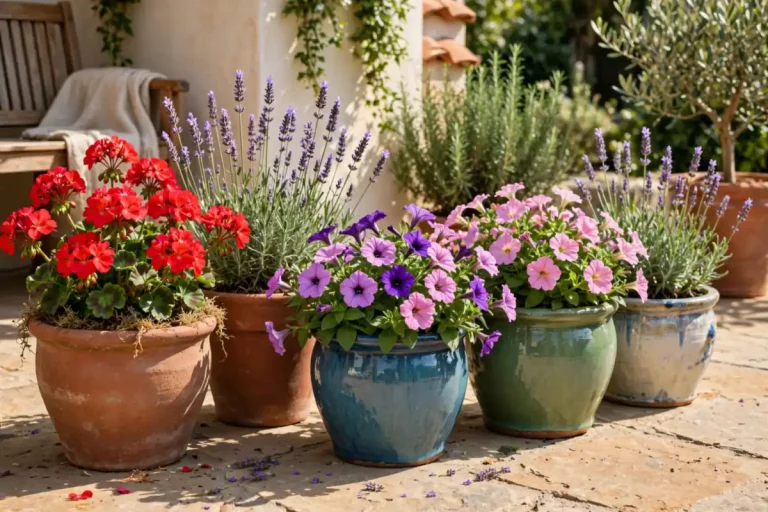
Short on space? The same principles shrink gracefully. A single square metre planted with one rose, three salvias and a skirt of hardy geraniums gives a full season of flowers by a front door. A strip bed along a path (even 40 cm wide) works if you stick to one repeated plant — lavender alone, or catmint alone, reads as a deliberate design rather than a compromise. Vertical beds stack the idea upward: wall planters, tiered stands and climbing roses over a narrow bed triple the flowers without touching the footprint. And never underestimate the one-pot bed: a single large container planted thriller-filler-spiller is a flower bed in everything but name.
Frequently Asked Questions
What is the easiest flower bed idea for a beginner?
The low-maintenance perennial bed (idea 8) or the beginner recipe above: coneflowers, salvia, zinnias and marigolds in a sunny spot. Both forgive irregular watering, need no special soil, and bloom for months in the first year.
How do I make a flower bed look professional?
Three habits: plant in odd-numbered groups and drifts rather than single specimens; repeat the same 3–5 plants through the whole bed; and finish with a clean edge and fresh mulch. Repetition and edges are what separate designed beds from plant collections.
What are the best low-maintenance flower bed ideas?
Perennial beds built on tough plants — daylilies, sedum, coneflowers, ornamental grasses, Russian sage — with a thick mulch. Avoid thirsty annuals and anything that needs staking, spraying or dividing every year.
How much does a flower bed cost to create?
A 3 × 1 m bed can be planted for very little using seed-grown annuals and a few perennials, or several hundred in large nursery plants. The middle path most gardeners take: buy the perennial skeleton in small pots (they catch up fast) and fill gaps with seed.
Can I mix vegetables or herbs into a flower bed?
Absolutely — the French potager tradition does exactly this. Rainbow chard, purple kale, chives with their pompom flowers, and borage all earn their place visually and feed pollinators too. Just keep edible beds free of sprays you would not want on food.