
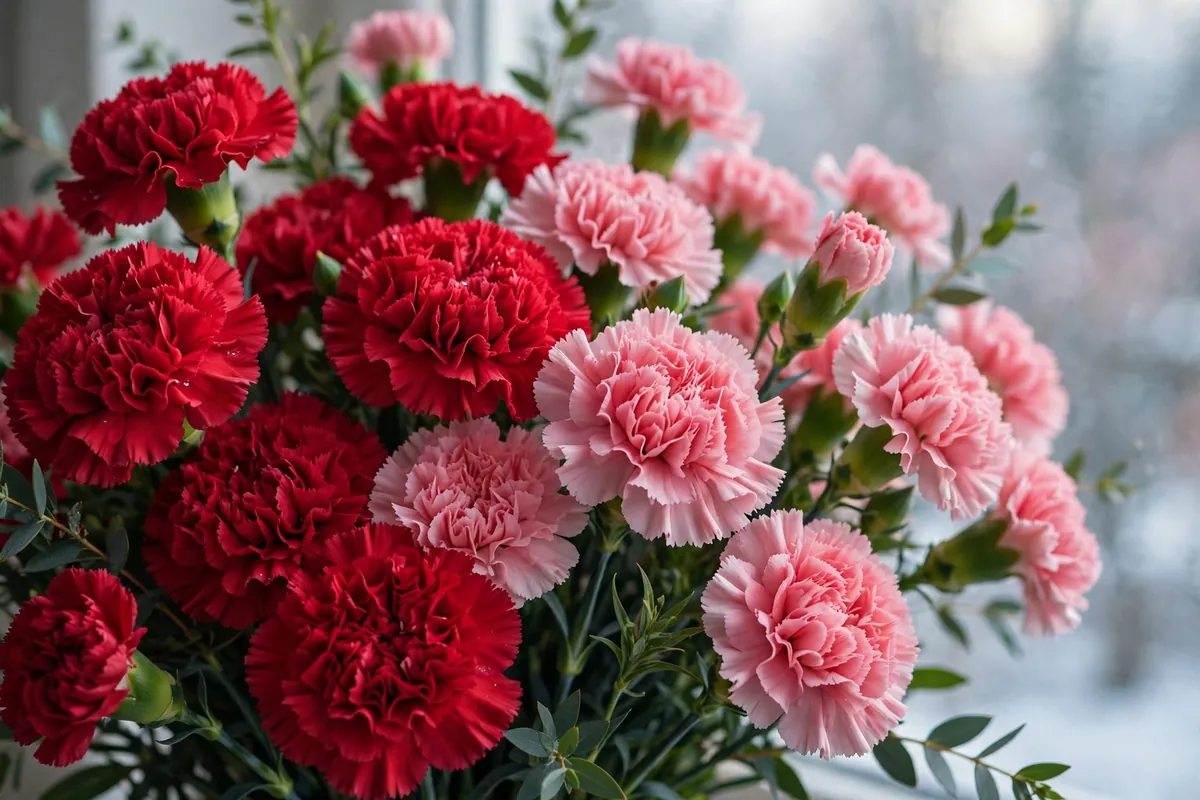
January Birth Flower: Carnation and Snowdrop Meaning, Symbolism and Facts
January opens a brand new year. The holidays are over, the air is cold, and the garden sleeps. But two brave flowers belong to this quiet month.
January has two birth flowers. The carnation is the main one. The snowdrop is the second. Most January birthdays are Capricorn. The last part of the month moves into Aquarius.
Quick Answer
The January birth flowers are the carnation and the snowdrop. The carnation means love, fascination, and distinction. The snowdrop means hope, purity, and comfort. One brings rich colour and spicy scent. The other brings the first white bloom of the year — through the snow.
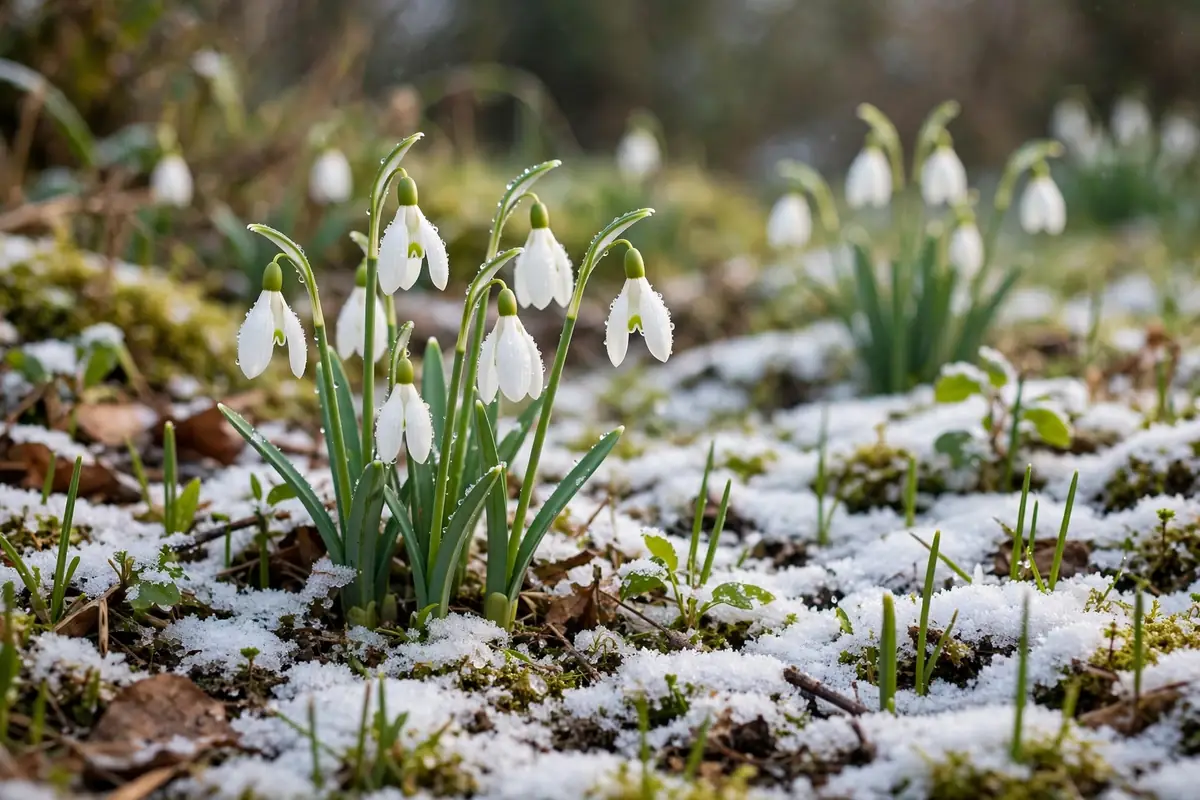
Table of Contents
- Carnation: The Primary January Birth Flower
- Snowdrop: January’s Second Birth Flower
- Carnation vs Snowdrop
- Birth Flowers by Month
- How to Grow January Birth Flowers
- Gift Ideas for a January Birthday
- Frequently Asked Questions
Carnation: The Primary January Birth Flower
The carnation is one of the oldest flowers in the world. People have grown it for more than 2,000 years. The Greeks and Romans wove it into garlands for ceremonies.
No one knows the name for sure. One idea says it comes from “coronation,” because the flowers crowned those garlands. Another points to the Latin “carnis,” meaning flesh, for the soft pink colour of the first carnations.
The carnation stands for love, fascination, and distinction: being special, and one of a kind. You can read more about the flower on the carnation page on Wikipedia, or browse flowers that start with C.
What Carnation Colours Mean
The carnation speaks in colour. Each shade carries its own message.
- Red: deep love and admiration.
- Pink: gratitude, and a mother’s love that never dies.
- White: pure love and good luck.
- Purple: in old lists, it meant capriciousness — a playful, changeable mood.
- Yellow: in old, strict lists, yellow could mean disappointment — so most people pick red, pink, or white for birthdays.
Pink carnations are a Mother’s Day classic: a mother’s love never fades, and neither does the flower. The red kinds also sit high on any list of red flowers for love.
Carnations are famous in the vase, too — one of the longest-lasting cut flowers of all. A fresh bunch can stay bright for about two weeks.
Carnation Quick Facts
- Type: a perennial that many gardeners grow as an annual.
- Bloom time: late spring into summer in the garden. Florists sell them all year.
- Scent: light, warm, and a little spicy, like cloves.
- Light: full sun.
- Vase life: up to about two weeks — one of the longest of any cut flower.
Snowdrop: January’s Second Birth Flower
The snowdrop is a tiny flower with a brave heart. It blooms in late winter, in the coldest weeks. Its white bells nod on thin green stems, often pushing up through real snow.
The snowdrop stands for hope, purity, and consolation — comfort in a hard time. It is the garden’s first promise that spring is on its way. You can find it among the toughest winter flowers, or explore flowers that start with S.
A Legend of Hope
An old legend says that after Adam and Eve left Eden, Eve stood sad and cold in the snow. An angel caught some falling snowflakes, blew on them, and turned them into the first snowdrops — a sign that winter would not last forever. It is only a legend, but it fits this small, hopeful flower perfectly.
The snowdrop also helps modern medicine: it holds a natural substance called galantamine, used in medicine for memory illness. A hopeful flower, in more ways than one.
Snowdrop Quick Facts
- Type: a small bulb. It comes back every year.
- Bloom time: late winter, often in January and February, sometimes through snow.
- Light: part shade. It is happy under trees and shrubs.
- Planting tip: snowdrops do best when planted or moved “in the green” — just after flowering, while the leaves are still green.
- Safety: the bulbs are poisonous if eaten. Keep them away from children and pets.
Carnation vs Snowdrop
The two January flowers could hardly be more different. One is big, bold, and long-lasting. The other is small, quiet, and first.
| Flower | Type | Where It Grows | Bloom Season | Meaning | Best For |
|---|---|---|---|---|---|
| Carnation | Perennial, often grown as an annual | Sunny beds, borders, and pots | Late spring to summer; in shops all year | Love, fascination, distinction | Bouquets, gifts, long vase life |
| Snowdrop | Small bulb | Under trees, in lawns, shady edges | Late winter, often through snow | Hope, purity, consolation | Winter gardens, soft drifts, quiet hope |
Birth Flowers by Month
Want the full year at a glance? Here is the birth flower chart for all twelve months.
| Month | Birth Flower(s) |
|---|---|
| January | Carnation & Snowdrop |
| February | Violet & Primrose |
| March | Daffodil & Jonquil |
| April | Daisy & Sweet Pea |
| May | Lily of the Valley & Hawthorn |
| June | Rose & Honeysuckle |
| July | Larkspur & Water Lily |
| August | Gladiolus & Poppy |
| September | Aster & Morning Glory |
| October | Marigold & Cosmos |
| November | Chrysanthemum & Peony |
| December | Narcissus & Holly |
For the full chart with every month in one place, see our birth flowers chart and guide.
How to Grow January Birth Flowers
The two flowers ask for different care: the carnation loves sun, and the snowdrop loves quiet shade.
Growing Carnations
- Sow seeds indoors in late winter, or plant young plants outside after the last spring frost.
- Give them full sun, at least six hours a day.
- Use soil that drains well. Carnations rot in wet ground.
- Pinch the tips of young plants to make them bushy, with more stems.
- Pick off dead blooms often, and fresh flowers will keep coming.
Growing Snowdrops
- Plant the small bulbs in fall, pointed end up, a few inches deep.
- Or move a clump “in the green” in spring, right after it flowers. This works even better than dry bulbs.
- Choose part shade, under trees or along a hedge, where the soil stays moist.
- Then leave them alone. Snowdrops spread slowly into white drifts on their own.
Growers in r/gardening on Reddit share tips for both flowers, in every climate.
Gift Ideas for a January Birthday
Red carnations are the classic January gift, and they match the month’s birthstone: the garnet, a deep red gem. Red flowers beside a garnet gift make a rich, warm pair.
Pink carnations say thank you. Give them to a January-born mother, teacher, or friend, and the colour does the talking for you.
For something different, give a small pot of snowdrops — a gift of hope for the new year, and a quiet promise that good days are coming.
Frequently Asked Questions
What is the January birth flower?
January has two birth flowers. The carnation is the main one, and the snowdrop is the second. The carnation stands for love and fascination. The snowdrop stands for hope and purity.
What do carnation colours mean?
Red means deep love and admiration. Pink means gratitude and a mother’s undying love. White means pure love and good luck. In old lists, purple meant a playful, changeable mood, and yellow could mean disappointment — so red, pink, and white stay the safest birthday picks.
Why is the snowdrop a symbol of hope?
It blooms in the heart of winter, sometimes straight through the snow. An old legend says an angel turned snowflakes into snowdrops to give Eve hope. To many people, it is the first sign that spring is coming.
What is January’s birthstone?
January’s birthstone is the garnet, a deep red gem. Its rich colour pairs beautifully with red carnations.
How long do carnations last in a vase?
Carnations are one of the longest-lasting cut flowers. With fresh water in a clean vase, they stay bright for about two weeks, sometimes longer. For more views, see questions about the January birth flower on Quora.

One Comment