How to Store Dahlia Tubers for Winter: Dig, Cure, and Pack Them Right
Dahlias are the drama queens of the late-summer garden — enormous, improbable blooms right up until frost. But they are semi-tropical plants, and in most of the United States their tubers will not survive winter in the ground. The good news: with one afternoon of work in fall and a cool corner of your basement, you can keep the same tubers blooming year after year — and even multiply them.
Quick answer: Dig dahlia tubers after the first light frost blackens the foliage but before a hard freeze (around 28°F), cut stems to 2–6 inches, lift the clump carefully, cure it dry for a few days at 60–70°F out of direct sun, then pack it in vermiculite, peat moss, or wood shavings and store at 40–50°F — cool, dark, and above freezing — checking monthly for rot or shriveling.
Do You Actually Need to Dig Them Up?
It depends entirely on your USDA hardiness zone. Dahlias are reliably winter-hardy only in zones 7–10, where NC State Extension says you can simply mulch over them in winter and leave them in the ground. In zones 6 and colder, heavy freezing and winter rains will rot the tubers — they have to come inside.
Not sure of your zone? If your ground freezes solid for weeks at a time, dig. If you have ever lost dahlias (or cannas, or gladiolus) left in the ground over winter, dig. Treating them as lift-and-store plants is the safe default everywhere except the warmest regions — and it is also how you get free plants, since one clump divides into several.
One timing note from Penn State Extension: tubers need roughly 120 days in the ground to mature enough for storage. Dahlias planted very late may not have formed storable tubers, no matter how carefully you dig — another reason to get them in the ground by early summer.
When to Dig: The Frost Window
The signal to dig is the first light frost that blackens the dahlia foliage. Do not rush it: the tubers keep maturing as long as the plant is alive, and mature tubers store far better than immature ones. As University of Wisconsin–Madison Extension puts it, let the tops die back from a light frost, but dig before a hard freeze.
Practically, that means:
- Watch the forecast in October. A light frost (32°F, blackened leaves) is your green light.
- Dig within a few days of that frost. Damaged stems are an entry point for rot organisms — do not leave the clump sitting in cold, wet soil for weeks.
- Never let a hard freeze (around 28°F or below) hit the tubers in the ground. A hard freeze can damage the roots themselves.
You do not need to wait for frost at all if a hard freeze is coming imminently — digging a week early beats losing the clump. But if the weather is still mild, let the plants keep photosynthesizing; every extra week fattens the tubers.
How to Dig Without Breaking Them
Dahlia tubers are attached to the crown by a narrow neck, and that neck is the weak point of the whole operation. A tuber snapped off at the neck looks perfectly healthy but will never sprout — the growth buds (eyes) live on the crown, not on the tuber body. Dig like every tuber matters, because it does.
Label first. Before you touch a shovel, tie a name tag to each stem or write the variety name on the stem with a marker. Once the foliage is gone, every clump in the box looks identical, and "mystery dahlia" is a poor garden plan.
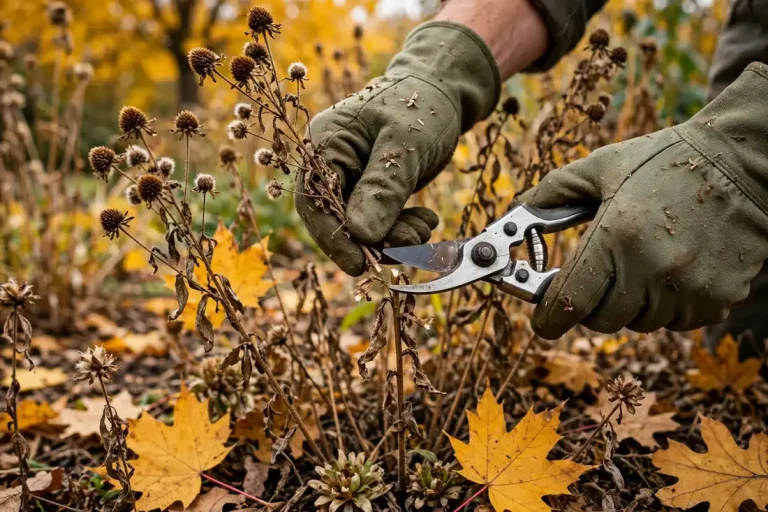
Cut the stems down to 2–6 inches right before you dig — Iowa State says 2 to 4 inches, Kentucky Extension says 4 to 6. Do not cut them days ahead: dahlia stems are hollow, and a cut stem standing in the rain funnels water straight down into the crown.
Loosen from a distance. Push a garden fork into the soil about 12 inches out from the stem and work your way around, loosening the whole root zone. Lift the clump from underneath. Never pull on the stem to yank it up — that is how necks snap.
Turn it upside down. Once lifted, flip the clump so the hollow stems drain. Water pooled in the stems is a rot starter kit.
To Wash or Not to Wash
Here is where the experts genuinely disagree, so you deserve the honest version:
- Iowa State Extension says wash the tuberous roots to remove remaining soil.
- NC State Extension says dry carefully and do not wash.
- UNH Extension suggests swishing clumps in a tub of water or hosing off soil clumps.
- Penn State's Master Gardener practitioner sprays tubers to remove excess soil — then dries them for four or five days, longer than the standard recommendation, because she found the usual 24–48 hours left them rot-prone.
The practical synthesis: you do not need them spotless, but big clods of soil hold moisture against the tuber all winter, which invites rot. Shake or hose off the heavy soil, and if you wash, commit to a thorough drying period afterward. Wet tubers in storage are doomed; dry tubers in storage are nearly bulletproof.
Curing: The Step Everyone Rushes
Freshly dug tubers are full of moisture and covered in tiny nicks from digging. Curing — letting the skins dry and toughen — is what stands between you and a box of mush in January.
Set the clumps somewhere dry, airy, out of direct sunlight, at 60–70°F — UNH Extension's curing spec. A garage, mudroom, or basement corner works; the back porch does not if it is damp. Keep them upside down so the stems keep draining. The skins should feel dry and papery to the touch before they go into storage.
How long? Iowa State says until dry to the touch, usually about a day; Wisconsin says several hours to a few days; the Penn State practitioner dries washed clumps four or five days. Judge by feel, not the clock: if the skin still feels damp or cool, give it another day. Rushing this step is the single most common cause of storage rot.
Dividing: Fall or Spring?
A dahlia clump can be divided so that each piece — one tuber with an intact neck and a piece of crown carrying at least one eye — becomes a new plant. The question is when.
Dividing in fall is easier on your hands and your tools: the tubers are softer and cut cleanly. Kentucky Extension notes that cutting tops a few days before digging can help the eyes swell and become visible. If you divide in fall, dip the cut ends in fungicide (or let them air-dry 24–36 hours) and dip your cutting tools in a 1-part-bleach to 10-parts-water solution between plants to avoid spreading virus.
Waiting until spring has real advantages too: the eyes are more visible in spring, and every cut is a wound that can admit rot during months of storage — Wisconsin Extension leans toward spring division to prevent spoilage in storage.
The rule that matters either way: a tuber without a neck and crown piece will not grow. Thin necks (narrower than a pencil) usually dry out by spring — do not waste storage space on them. And cut away any crown tissue showing brown or rusty spots; that is crown rot, and the tuber will not make it.
Packing for Storage: Cool, Dark, and Breathing
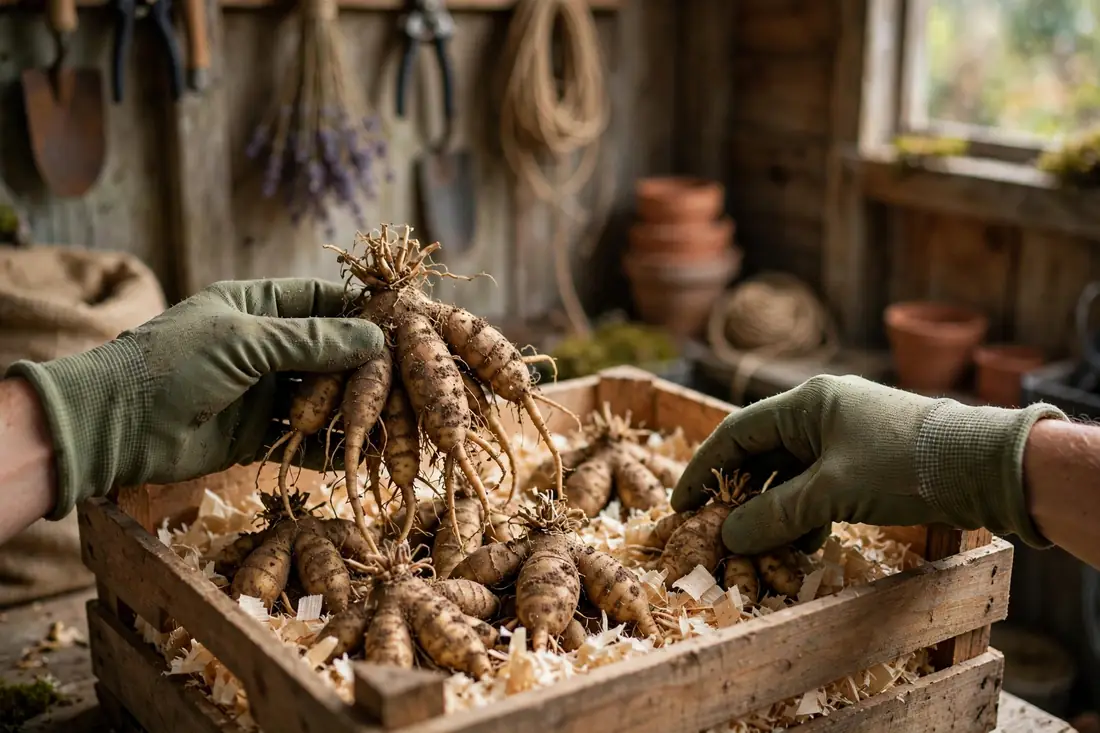
Once cured, pack the tubers in a medium that holds a little moisture around them while letting air move: coarse vermiculite, peat moss, wood shavings, or dry sand are the extension-approved options. Nestle the clumps in, cover completely, and use a container that breathes — a ventilated cardboard box, or a plastic bin with holes drilled in the sides and the lid left unlatched. Airtight containers trap moisture and rot everything inside.
The storage spot needs to be:
- Cool: 40–50°F (the consensus across Iowa State, Utah State, and Penn State; NC State runs slightly cooler at 35–45°F). A basement, unheated mudroom, or attached garage that stays above freezing all winter is ideal.
- Dark. Light encourages premature sprouting.
- Above freezing, always. One hard freeze in storage kills the lot.
- Off cement floors. Concrete wicks cold and moisture — set boxes on a shelf or pallet.
Utah State adds a useful trick for dry climates: place a bowl of water near (not in) the storage containers to nudge the humidity up. The target is a narrow zone all winter: damp enough that tubers do not shrivel, dry enough that they do not rot.
The Monthly Check (Don't Skip This)
Set a reminder: once a month, open the boxes.
- Mushy or moldy tubers: pull them out immediately. Rot spreads to neighbors.
- Shriveling tubers: the air is too dry — lightly spritz the packing medium (not the tubers directly) with water.
- Soggy medium: too wet — swap in fresh, dry medium. The Penn State practitioner changes cedar shavings if they feel moist in the first weeks, then they are usually fine for the rest of the season.
- Rodents: check for gnaw marks. Mice love dahlia tubers.
Most failures happen in the first month, while the moisture balance settles. After that, a stable setup mostly takes care of itself.
Waking Them Up in Spring
About a month before your last frost date, bring the tubers into a warm room (60–70°F) to wake up. Pot them up in barely moist potting mix — eye facing up — and they will sprout weeks before it is safe to plant out, giving you a head start on the season. Plant out only after all frost danger has passed, and harden them off first if they have been growing indoors.
And if a variety underwhelmed you last year? Winter is the perfect time to edit your collection. Compost the tubers of the dahlia you never quite loved, and give the box space to the ones that earned it.
7 Dahlia Storage Mistakes to Avoid
- Digging too early. Immature tubers store poorly. Wait for the frost signal.
- Cutting stems days before digging. Hollow stems funnel rainwater into the crown — cut right before you lift.
- Yanking the clump by the stem. Snapped necks mean dead tubers. Lift from underneath with a fork.
- Storing wet tubers. The #1 rot cause. Cure until the skins feel dry and papery.
- Airtight containers. No airflow = trapped moisture = rot. Ventilate.
- Letting them freeze in storage. One freeze kills everything. Monitor the spot in cold snaps.
- Skipping the labels. In March, every shriveled clump looks the same. Label in fall.
Frequently Asked Questions
Can I leave dahlias in the ground over winter?
In USDA zones 7–10, yes — mulch heavily over them after the foliage dies back. In zones 6 and colder, the tubers will freeze or rot; dig and store them.
What temperature do dahlia tubers need in storage?
Between 40 and 50°F, always above freezing. A basement or attached garage that holds steady in that range is ideal. Avoid spots that swing widely or dip below 32°F.
Should I divide dahlia tubers in fall or spring?
Both work. Fall division is easier because tubers are softer; spring division shows the eyes more clearly and avoids storing open wounds. Each division must include a tuber with an intact neck plus a piece of crown with at least one eye.
Why are my stored dahlia tubers shriveling?
The storage air is too dry. Lightly mist the packing medium (not the tubers) with water and make sure the container is not in a heated room. Slight shriveling is cosmetic; severe shriveling means the tuber may not have enough energy to sprout.
Why did my dahlia tubers rot in storage?
Almost always excess moisture: tubers stored before fully curing, a packing medium that stayed soggy, or an airtight container. Next time, cure longer, use a breathable container, and check monthly.
Can I store dahlia tubers in plastic bags?
Only with ventilation — perforated bags or bags left open inside a box. Sealed plastic traps moisture and causes rot. A ventilated box or a bin with drilled holes and an unlatched lid is safer.
Do dahlia tubers need light in storage?
No — store them dark. Light triggers premature sprouting, which exhausts the tuber before planting season.
How do I know if a tuber is still alive in spring?
A viable tuber is firm (not mushy), with an intact neck attached to crown tissue. Small pink or white eyes may be visible on the crown. If the tuber is soft, hollow, or the neck is broken off, it will not grow.
Can I grow dahlias from seed instead?
Yes, but seed-grown dahlias will not match the parent variety — they are genetically unique, usually single-flowered, and smaller. If you love a specific named variety, tubers (or cuttings) are the only way to keep it true.
When should I start dahlia tubers indoors?
About 4–6 weeks before your last frost date. Pot them in barely moist mix at 60–70°F, eye up. They will sprout and be ready to plant out — after hardening off — once frost danger has passed.
Sources consulted: UNH Extension (digging and storing dahlia tubers), Penn State Extension (dahlia winter storage), University of Kentucky Extension (overwintering dahlia tubers), Iowa State Extension (storing tender bulbs), UW–Madison Extension (storing tender bulbs), NC State Extension (dahlia hardiness zones).