Which Perennials to Cut Back in Fall — and Which to Leave Alone
Every fall, the same temptation hits: the garden looks tired, the shears are sharp, and cutting everything to the ground feels like proper gardening. But fall cleanup done wrong is one of the most common ways gardeners accidentally sabotage next spring. Some perennials must be cut back in fall. Others are harmed by it. And a third group does not care — but the birds and beneficial insects do.
Quick answer: Cut back diseased, pest-prone, and floppy perennials (hostas, bearded iris, peonies, bee balm with mildew) in fall after a hard freeze. Leave seed heads (coneflower, black-eyed Susan), ornamental grasses, evergreen perennials, and marginally hardy plants like mums standing until spring. Never do major pruning on roses, lavender, or spring-flowering shrubs in fall.
When to Do Fall Cleanup: Wait for the Hard Freeze
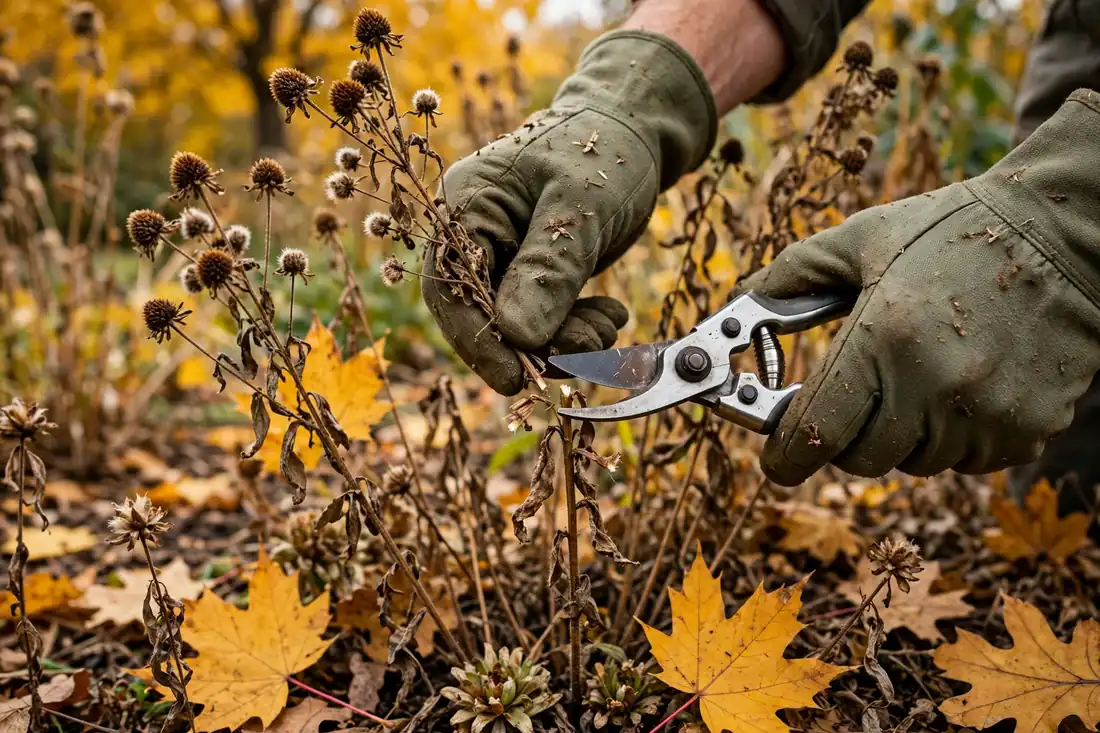
Timing matters more than technique. Cutting perennials back while they are still green and photosynthesizing robs the roots of energy they are storing for winter. The rule from extension guides: wait until a hard freeze — 28°F (about -2°C) or colder — has killed the tops.
As a rough median, the first 28°F night arrives around mid-October in zone 5, late October in zone 6, and early November in zone 7 (unverified for any specific location — check your local frost dates, because these shift year to year). After that point, the foliage has done its job and cleanup is safe.
One more timing note: do this work on a dry day if you can. Cutting wet foliage spreads disease, which defeats half the purpose of fall cleanup.
Cut These Back in Fall
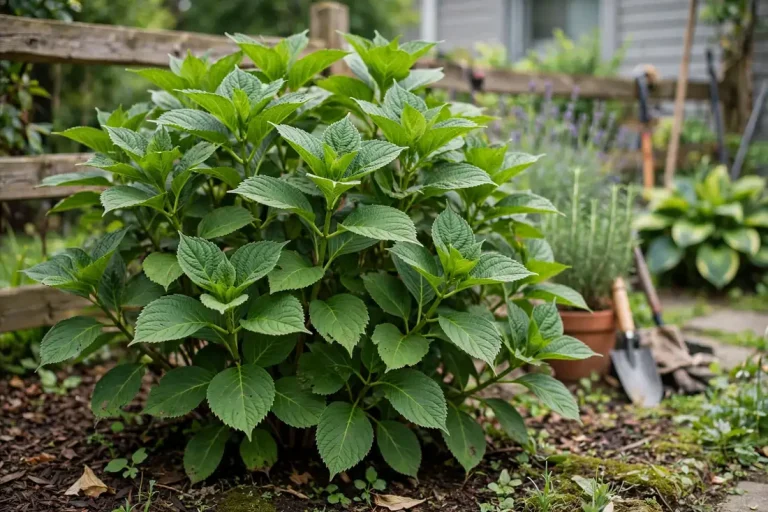
Hostas. Once frost blackens the leaves, cut them to the ground. Fallen hosta foliage harbors slugs and slug eggs, plus fungal problems — leaving it is an invitation. Cut, don't pull.
Bearded iris. Trim the fan-shaped leaves to about 6 inches in a fan shape after frost. This removes iris borer eggs that overwinter in the foliage — one of the most effective borer controls there is, and it costs nothing.
Herbaceous peonies. After the foliage dies back, cut stems to about an inch above the ground and discard the foliage — do not compost it. Peony leaves carry botrytis (gray mold) that overwinters and re-infects new growth in spring. (Tree peonies are the exception — leave those alone.)
Phlox and bee balm with powdery mildew. If they were diseased this year, cut them back and throw the material away (not in compost). You are breaking the disease cycle, not just tidying.
Daylilies. Once dormant, trim foliage to 4–6 inches. This removes hiding places for pests and diseases over winter.
Floppy, spent annuals. Annuals will not return — pull them or cut them down once finished, and make room for fall-planted bulbs or spring plans.
Anything diseased. This is the golden rule of fall cleanup: if a plant had a disease problem this season, its foliage goes in the trash, not the compost pile and not left standing.
Leave These Standing Until Spring
Coneflowers, black-eyed Susans, and other seed-head plants. Their seed heads feed finches and other birds all winter. This is the single easiest wildlife-friendly thing a gardener can do — just do nothing.
Ornamental grasses. Their upright foliage catches frost and snow beautifully, provides winter shelter for beneficial insects, and protects the crown from freeze-thaw damage. Cut them back in early spring before new growth starts.
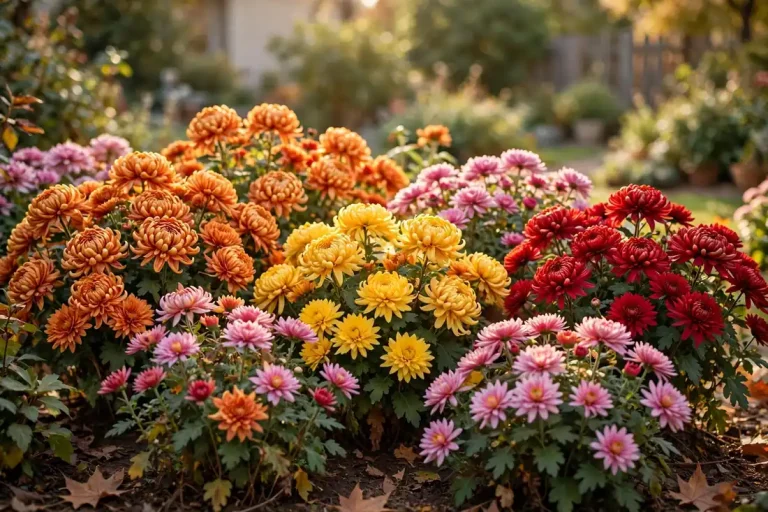
Garden mums and other marginally hardy plants. The dead top growth insulates the crown. Cutting mums back in fall measurably reduces their chances of surviving winter — leave them standing and cut away the brown material in spring.
Evergreen and semi-evergreen perennials. Heuchera (coral bells), hellebores, hardy geraniums, dianthus, moss phlox — these keep foliage through winter and need it. Never cut them back in fall.
Red-hot poker, anise hyssop, and other borderline-hardy perennials. Like mums, they survive winter better with their tops intact.
Do Not Prune These in Fall at All
Roses. Save major rose pruning for late winter or early spring when the plant is fully dormant. Hard fall pruning stimulates tender new growth that winter kills, and it opens wounds to disease. In fall, limit yourself to removing dead or damaged wood — and in windy climates, you may shorten overly long canes slightly so winter winds do not whip them around and damage the crown.
Lavender. Opinions vary, and this is worth stating honestly: some gardeners do a light shaping trim in early fall, but cutting into old wood or pruning hard in fall risks winter damage, and several extension sources advise waiting until spring. The safe guidance: if you did not prune right after summer flowering, leave it alone until spring, then cut out dead wood and shape as new growth emerges.
Spring-flowering shrubs (forsythia, lilac, azalea, rhododendron). These already carry next spring's flower buds on old wood. Fall pruning removes them. Prune these immediately after they flower in spring or early summer — never in fall.
Bigleaf and oakleaf hydrangeas. Same principle: buds for next year are already on the stems. (Panicle and smooth hydrangeas bloom on new wood and can be pruned in late winter — know your type.)
How to Cut Back Properly
A few technique points that separate good cleanup from damage:
- Cut, don't rip. Use clean, sharp pruners or shears. Ragged tears invite disease.
- Leave a stub, not a shave. Cut herbaceous perennials to 1–2 inches above the crown rather than scraping the crown itself — the stub protects the crown from rot.
- Clean your tools between diseased plants. A quick wipe with rubbing alcohol or a diluted bleach solution prevents you from spreading exactly the diseases you are trying to eliminate.
- Trash, don't compost, diseased material. Home compost piles do not get hot enough to kill most plant pathogens.
- Mulch after cleanup, not before. Once beds are cut back and the ground has frozen, apply winter mulch. Mulching unfrozen ground can shelter rodents and delay the dormancy you want.
What About Leaves?
Fallen leaves are a separate question from perennial cutbacks, and the answer surprises people: shredded leaves are excellent winter mulch. Run a mower over them and spread them on beds. Whole leaves matted down can smother plants and harbor disease, but shredded, they insulate, feed the soil as they break down, and shelter overwintering pollinators. Leave some leaf litter in a corner of the yard undisturbed — many beneficial insects overwinter in it.
Plant-by-Plant Quick Reference
For the "should I cut it?" moment in the garden, here is a fast lookup for common perennials:
| Plant | Fall action |
|---|---|
| Astilbe | Cut back after frost; leave a few seed heads if you like the look |
| Bee balm (Monarda) | Cut back, discard if mildewed |
| Black-eyed Susan | Leave standing for birds; cut in spring |
| Blanket flower (Gaillardia) | Cut back after frost |
| Catmint | Shear back after first flush; light fall cleanup ok |
| Coneflower (Echinacea) | Leave standing for birds; cut in spring |
| Coral bells (Heuchera) | Do not cut — evergreen foliage |
| Coreopsis | Cut back after frost |
| Daylily | Trim to 4–6 inches after dormancy |
| Delphinium | Cut back after frost; discard diseased foliage |
| Dianthus | Do not cut — semi-evergreen |
| Foxglove (biennial) | Leave first-year rosettes alone; they bloom next year |
| Garden mums | Leave standing; cut in spring |
| Hardy geranium | Do not cut — semi-evergreen |
| Hellebore | Do not cut — evergreen; remove tattered leaves in late winter |
| Hosta | Cut to ground after frost |
| Iris, bearded | Trim fans to ~6 inches |
| Lavender | Light trim only, or wait until spring |
| Moss phlox | Do not cut — evergreen |
| Ornamental grasses | Leave standing; cut in early spring |
| Peony (herbaceous) | Cut to ~1 inch; discard foliage |
| Phlox (garden) | Cut back; discard if mildewed |
| Red-hot poker | Leave standing in cold zones |
| Roses | Dead wood only in fall; prune in late winter |
| Russian sage | Leave standing, or cut to ~6 inches if damaged |
| Salvia (perennial) | Cut back after frost |
| Sedum (upright) | Leave standing for winter interest; cut in spring |
| Shasta daisy | Cut back after frost |
| Yarrow | Cut back after frost |
When in doubt about a plant not on this list, the tiebreakers are: was it diseased this year (cut it), does it feed birds or shelter insects (leave it), and is it marginally hardy (leave it).
Frequently Asked Questions
When should I cut back perennials in fall?
Wait until a hard freeze (28°F or colder) has killed the tops — the foliage needs to finish feeding the roots first. Median timing is mid-October in zone 5, late October in zone 6, early November in zone 7, but check your local frost dates.
Should I cut back hostas in the fall?
Yes. Once frost blackens hosta leaves, cut them to the ground and discard the foliage. Old hosta leaves shelter slugs, slug eggs, and fungal diseases over winter.
Can I cut back ornamental grasses in fall?
You can, but it is better to wait until early spring. Standing grass provides winter interest, shelters beneficial insects, and protects the crown from freeze-thaw cycles. Cut to a few inches tall before new growth emerges in spring.
Should I deadhead coneflowers in fall or leave them?
Leave them. Coneflower seed heads feed goldfinches and other birds through winter, and the plants themselves are unharmed by standing. Cut them back in spring when you do general cleanup.
Is it okay to prune roses in the fall?
Only lightly — remove dead or damaged wood, and in windy areas you may shorten extra-long canes to prevent wind damage. Save the real pruning for late winter or early spring when the rose is dormant.
What happens if I cut back mums in fall?
You reduce their chance of surviving winter. The dead stems insulate the crown against cold. Leave mums standing, mulch after the ground freezes, and cut away brown material in spring.
Should lavender be cut back in fall?
This one is debated. A light trim right after summer flowering is standard practice; hard pruning in fall risks winter kill. If you missed the post-bloom window, most extension guidance says to wait until spring — cut out dead wood and shape as new growth appears.
Do I need to cut back peonies?
Herbaceous peonies, yes — cut to about an inch above ground after the foliage dies, and discard (do not compost) the leaves to break the botrytis cycle. Tree peonies: leave alone.
Can I compost diseased perennial foliage?
No — at least not in a home compost pile, which does not sustain the temperatures needed to kill plant pathogens. Bag diseased material and put it in the trash (or municipal green waste, which is hot-composted).
Should I cut everything back to make the garden look tidy?
Tidy is not the same as healthy. A garden cut to bare soil in fall loses winter bird food, pollinator shelter, crown insulation, and often next year's flowers on spring-blooming shrubs. Cut what needs cutting; leave the rest standing until spring.
Sources consulted: Sow & Sprout fall cutback guide (compiled from university extension research), Jackson & Perkins (what to prune in fall), Van Wilgen's Garden Center (perennials to leave alone).